
Joking Hazard
Goliath Poland Sp z o.o.Card
4.4835.00 Reviews
- Version
- 1.7.6
- Installs
- 100.00K
- Age Rating
- Mature 17+
Screenshots
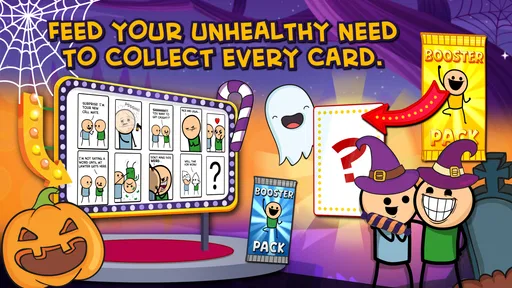
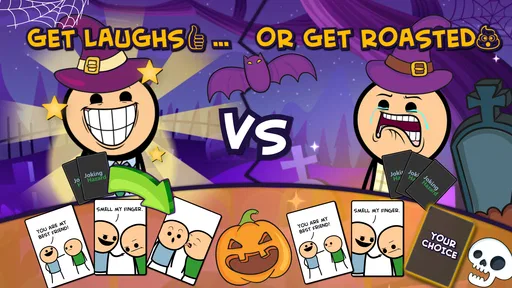
Our Review of Joking Hazard
 Analysis by Appyee
I went into Joking Hazard expecting a quick digital version of a rude party-card game, but I found something more useful than a simple copy of a tabletop experience. It is a fast, deliberately immature card game built around creating comic-strip situations, and its success depends much more on the people playing than on technical complexity. If your group enjoys dark humor, awkward punchlines, and the freedom to make a joke land badly, this adaptation can be an easy way to fill a spare evening. If your group wants strategy, a calm solo experience, or humor that stays broadly suitable for everyone, I would look elsewhere.
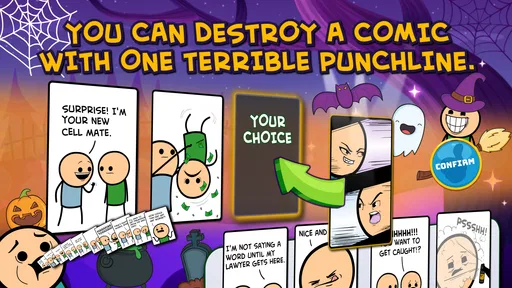
The game comes from Goliath Poland Sp z o.o. and is free to start. It belongs squarely in the party-card category, with a Mature 17+ content rating that should be taken seriously rather than treated as a formality. The central appeal is the shared act of arranging cards into a three-panel joke. That sounds simple, and it is, but the fun comes from judging timing, tone, and the reactions of the people around you.
How I Decide Whether It Is Worth Playing
My first question with any party game is not whether it has a clever ruleset. I ask whether it can get a group involved quickly. Here, the answer is generally yes. The premise is easy to explain: players work with cartoon-style panels and try to form a funny, shocking, or unexpectedly strange sequence. You do not need to spend a long time learning complicated card interactions before the first round can begin.
That low entry barrier makes it a good candidate for a casual gathering. Someone can join after the game has already started, understand the basic objective, and contribute without studying a rulebook. I also like that the humor does not require every player to be equally competitive. One person may focus on constructing a coherent joke, while another may prefer choosing the most outrageous ending. Both approaches can work.
Still, the decision depends heavily on your group’s boundaries. The Mature 17+ label signals that this is not a family card game disguised by cartoon art. The jokes can be crude, provocative, or uncomfortable, and that is part of the design rather than an occasional accident. Before opening a session with new acquaintances, I would make sure everyone understands the tone. That small conversation can prevent the game from turning an otherwise relaxed evening into an awkward one.
I would also consider how much patience your group has for subjective judging. A punchline that seems brilliant to one player may receive almost no reaction from another. There is no reliable way to solve that because the uncertainty is the heart of this kind of humor. If your friends enjoy arguing over which joke is funniest, the disagreement becomes entertainment. If they dislike judging or take losing personally, the same mechanic can become tiring.
What the Digital Format Changes
The online adaptation is most appealing when you want the idea of the physical game without carrying a box of cards around. A phone or tablet is easier to bring into a spontaneous hangout, and the digital format removes the need to spread cards across a table. That convenience matters when people are sitting in a small room, traveling, or joining a casual game during a break.
At the same time, a screen changes the social rhythm. With physical cards, players naturally see hands, gestures, and reactions around the table. On a mobile device, attention can become more concentrated on the display. I found that the strongest sessions were the ones where players read the finished comic aloud or explained why a particular combination was funny. Without that spoken interaction, the game risks becoming a sequence of taps rather than a shared activity.
My practical tip is to treat the device as the card table, not as the entire conversation. Put it where everyone can see it, pause after each completed setup, and let the group react before moving on. This simple habit makes the adaptation feel more like a party game and less like a solitary app being passed around.
Where the Game Performs Best
The strongest part of the experience is the speed at which a normal situation can become absurd. The cards provide enough structure to get a joke moving, but the combinations leave room for interpretation. I enjoy that the best result is not always the most obviously offensive one. Sometimes a bland-looking setup becomes funny because the final panel changes its meaning completely.
That unpredictability gives the game replay value within a single gathering. You are not only waiting for your turn; you are watching how other players interpret the same visual language. Two people can receive similar material and create completely different tones. One may aim for a clean narrative, while another chooses a deliberately nonsensical sequence. The contrast keeps the table lively.
Another advantage is that the game rewards awareness of the audience. A player who knows what their friends find funny can make a more effective choice than someone who simply picks the most extreme card. This creates a subtle social skill layer without turning the game into a serious strategy contest. I found myself thinking less about “the best card” and more about “what will this particular group appreciate?”
The real winning skill is reading the room, not memorizing rules. That is an important distinction for anyone comparing it with traditional card games. You will not get the same satisfaction as you would from planning several turns ahead, managing resources, or building a carefully optimized deck. The reward here is immediate group reaction.
A Useful Way to Organize a Session
For a first session, I would avoid treating every round as a competition that must be taken seriously. Let players experiment with the tone and discover what the group accepts. Once everyone understands the rhythm, judging becomes more enjoyable because players can deliberately tailor their choices to the audience.
In a mixed group, I would also establish a simple boundary before beginning: people should be able to reject a joke that makes them genuinely uncomfortable without having to explain themselves. That is not a special rule of the app; it is sensible party etiquette for a Mature 17+ game. It also helps preserve the playful spirit, because humor works better when participation feels voluntary.
A particularly effective use case is a small gathering where people already know one another but need an activity that does not demand constant concentration. The game can sit between conversation and competition. Players can discuss the panels, interrupt with their own interpretation, and return to the round without losing a complicated state. I would not choose it for a formal game night focused on deep tactics, but I would gladly suggest it for an informal evening with friends who enjoy edgy comedy.
How It Compares With Other Choices
I compare it with other card games by asking what the group wants from the time together: tactical decisions, a tactile tabletop ritual, or a quick prompt for shared jokes. This adaptation fits best when humor and conversation matter more than lasting strategy, while a physical deck can suit players who want the reveal to feel more theatrical. That distinction also helps set realistic expectations for how often it will earn a place in your routine.
When This Adaptation Is the Better Fit
Compared with ordinary digital card games, this one is much less about building a winning engine and much more about expressing a sense of humor. That makes it a better choice when the group wants a social prompt rather than a test of calculation. You can start playing without preparing a deck, learning elaborate card effects, or committing to a long campaign.
It also has an advantage over many mobile games that are designed mainly for one player. The important moments happen when people react together. Even if a particular comic falls flat, the failed attempt can become a joke of its own. That kind of shared failure is difficult to reproduce in a conventional solo card game.
The free entry point is another reason I would try it before buying a physical alternative. You can install it without paying upfront, see whether the humor suits your group, and decide whether it deserves a regular place in your social routine. The presence of optional purchases means “free” should not be confused with “completely without spending,” but the initial barrier is low.
When a Physical Party Game May Be Better
A physical version can be the stronger choice if your group values tactile interaction. Handling cards, hiding choices, and watching someone reveal a punchline all create a kind of theater that a phone screen cannot fully replace. A physical setup may also feel more natural when several people are gathered around a table and want the activity itself to be the center of attention.
I would also lean toward a physical alternative for a group that dislikes using phones during social events. Even a well-designed digital adaptation can encourage people to look down at a device. If your friends are trying to reduce screen time, the convenience of the app may not outweigh that drawback.
Traditional strategic card games are a better match for players who want decisions to matter beyond the current joke. In those games, a clever move can shape later turns, while here the main payoff is the immediate response to the comic. Neither approach is superior; they serve different moods. I would not recommend this game to someone who specifically asks for tactical depth, long-term planning, or a strong solo mode.
Who Should Skip It
Parents looking for something to play with younger children should skip it because of the Mature 17+ rating and the adult tone. The cartoon presentation may look approachable, but the content rating is the more useful guide. I would also avoid recommending it to workplaces, mixed-age gatherings, or groups where people have not yet established a comfortable sense of humor.
Players who need a dependable competitive structure may become frustrated. The quality of a round depends on the available combinations and on the judge’s taste, so a clever player cannot always overcome an unresponsive audience. The game is built for subjective laughter, not perfectly balanced competition.
Finally, anyone who prefers quiet, independent play should choose another card game. The app can occupy a few minutes alone, but its main value appears when people discuss the panels and react to each other. It is a social tool first and a standalone game second.
What to Know About Cost and Commitment
The game is free to download, while its in-app purchases range from $1.99 to $48.99 per item. I would approach those purchases carefully. The sensible workflow is to play enough free content to determine whether your group actually returns to it. A party game is only good value if it becomes part of your routine; buying additional material before knowing that can turn a casual experiment into an unnecessary expense.
There is also a less obvious cost: the effort of getting the right people together. This is not a game that solves a boring commute or gives you something substantial to do every night. Its value rises sharply when several compatible players are available and falls when you are alone or when the group’s humor does not align.
The app requires Android 6.0 or later, so it is accessible on a broad range of older Android devices. I would still check the device experience before planning a large gathering around it, especially if someone is bringing an older phone. A party game should remove friction, not create a technical delay while everyone waits for one device to cooperate.
Signs That It Has Found Its Audience
The reception suggests that the adaptation has already attracted a meaningful audience: it has more than one hundred thousand installs, an average rating of 4.4 from about 5,800 ratings, and roughly 835 written reviews. Those figures do not guarantee that every group will enjoy the humor, but they do indicate that the concept is connecting with a substantial number of players.
The current version is 1.7.6, and the game was released on March 28, 2025. I mention those details because they help set expectations: this is a relatively recent mobile adaptation rather than an old card app that has simply been left in a store. Even so, I would judge it by the quality of the actual group experience, not by its age or popularity.
My Recommendation
I recommend giving this game a try if you want a quick, irreverent party activity and your friends are comfortable with adult humor. The free starting point makes experimentation easy, while the simple comic-building format means nobody needs to become an expert before contributing. In the right room, a weak card combination can still produce a memorable conversation, and a strong one can create the kind of shared laughter that makes a short session worthwhile.
I would not recommend it as a replacement for a strategic card game, a family game, or a serious solo pastime. Its limitations are closely tied to its identity: the humor is subjective, the content is not broadly appropriate, and the digital format cannot reproduce every social detail of physical cards. Those are not minor footnotes; they should determine whether you install it.
My final advice is to start with a small group of people who already understand one another’s boundaries. Keep the first session informal, read the finished panels out loud, and wait before spending on optional content. If the group starts quoting failed punchlines afterward, you have found the audience this adaptation is meant for. If everyone is silently tapping and waiting for the round to end, a different kind of card game will serve you better.
For me, that makes Joking Hazard a focused recommendation rather than a universal one. It succeeds when it is used as a conversation starter with cards attached, not when it is judged as a deep competitive system. Choose it for the people and the mood first; the app itself will then have a fair chance to deliver the chaotic, adult comic-strip fun it promises.
Verdict
Strengths of Joking Hazard
- Simple rules make it easy for new players to join quickly.
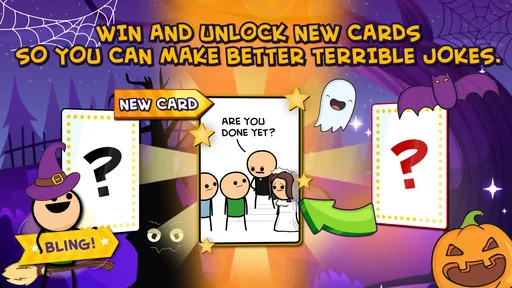
- Large card combinations create plenty of replay value.
- Works well for casual parties and group game nights.
- Humor is easy to understand without lengthy explanations.
- Compact digital format is convenient for playing on the go.
Limitations of Joking Hazard
- Some jokes may feel repetitive after several rounds.
- Adult humor makes it unsuitable for children or family play.
- The experience depends heavily on having an imaginative group.
- Random card draws can make some rounds feel unbalanced.
- May have limited appeal if you dislike crude or dark comedy.
Similar Picks in This Category
View All
Solitaire - Classic Card Games
MobilityWare4.6

UNO!™
Mattel163 Limited4.3

Spider Solitaire: Card Games
MobilityWare4.6

Solitaire.com - Classic Cards
Tripledot Studios Limited4.7

Plants vs. Zombies™ Heroes
ELECTRONIC ARTS4.1

Hearthstone
Blizzard Entertainment, Inc.4.1
Frequently Asked Questions
What is Joking Hazard, and how is the game played?
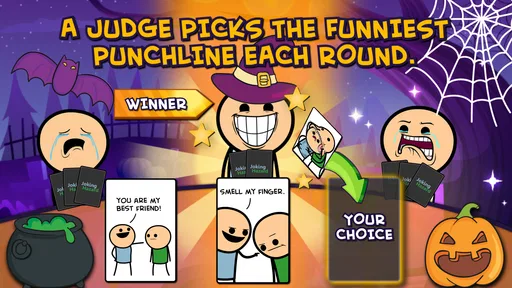
Joking Hazard is a party card game based on creating funny, inappropriate, and often unexpected three-panel comic strips. Players use cards featuring characters and situations inspired by dark humor and webcomic-style jokes. During each round, one player acts as the judge and selects the card that best completes the comic started on the table. The game is designed for group play and depends heavily on players’ sense of humor.
How many people can play Joking Hazard?
Joking Hazard is generally intended for three or more players, making it better suited to parties, gatherings, and casual game nights than solo play. The experience becomes more entertaining with a larger group because different players bring different comedic styles and interpretations to each comic. Before downloading or purchasing a digital version, check the specific edition because player limits and available modes may vary.
Is Joking Hazard suitable for children?
Joking Hazard is not a traditional family-friendly card game. Its humor can include mature themes, profanity, violence, sexual references, and deliberately offensive or uncomfortable situations. Parents should review the game’s age recommendation and content before allowing children or teenagers to play. It is best suited to adults who understand and enjoy edgy, irreverent comedy rather than players looking for a clean party game.
Does Joking Hazard require an internet connection or other players?
The answer depends on the version you are using. A physical edition can be played without internet access, while an official or unofficial mobile adaptation may require connectivity for online multiplayer, account features, updates, or matchmaking. Joking Hazard is primarily a social game, so it offers limited value as a solo experience. Confirm the app’s store description to see whether local play, private rooms, or offline modes are supported.
Is Joking Hazard free to download, and are there in-app purchases?
Availability, pricing, and monetization can differ depending on the platform and the specific Joking Hazard app or game edition. Some versions may require an upfront purchase, while others can include optional purchases, downloadable card packs, advertisements, or online subscription features. Before installing, review the Google Play Store or Apple App Store listing carefully, including the developer name, age rating, permissions, and any listed in-app purchase information.
Play our best games!


